
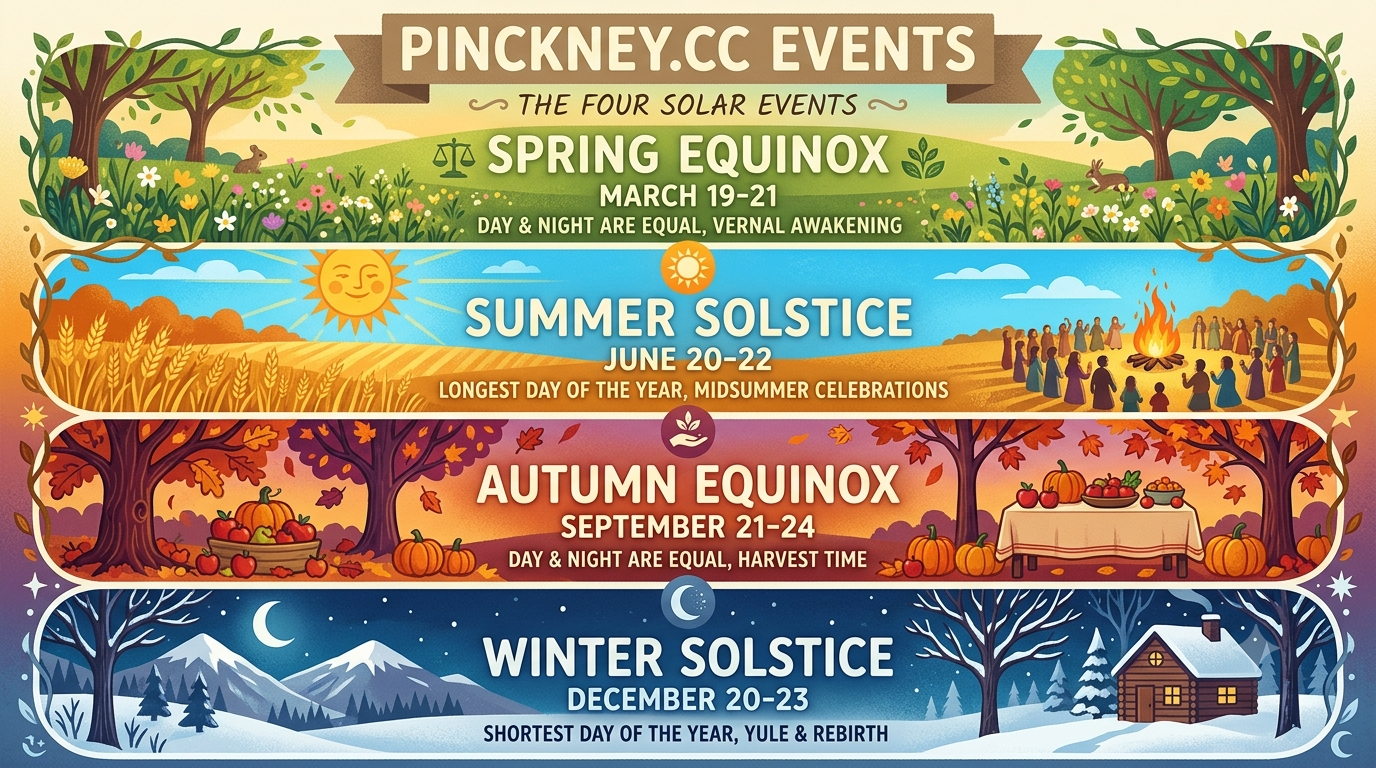
Here is the breakdown for the equinoxes and the solstices for solar events):
The Equinoxes
During an equinox, the day and night are of approximately equal length all over the world. This happens twice a year:
- Spring (Vernal) Equinox: Typically occurs on March 19, 20, or 21.
- Autumnal Equinox: Typically occurs on September 21, 22, or 23.
The Solstices
A solstice marks the longest or shortest day of the year. This also happens twice a year:
- Summer Solstice: Typically occurs on June 20, 21, or 22. (This is the longest day of the year in the Northern Hemisphere).
- Winter Solstice: Typically occurs on December 21, 22, or 23. (This is the shortest day of the year in the Northern Hemisphere).
Note: The exact dates can shift by a day or two from year to year because of the differences between our 365-day calendar year and the actual time it takes for the Earth to orbit the Sun.