
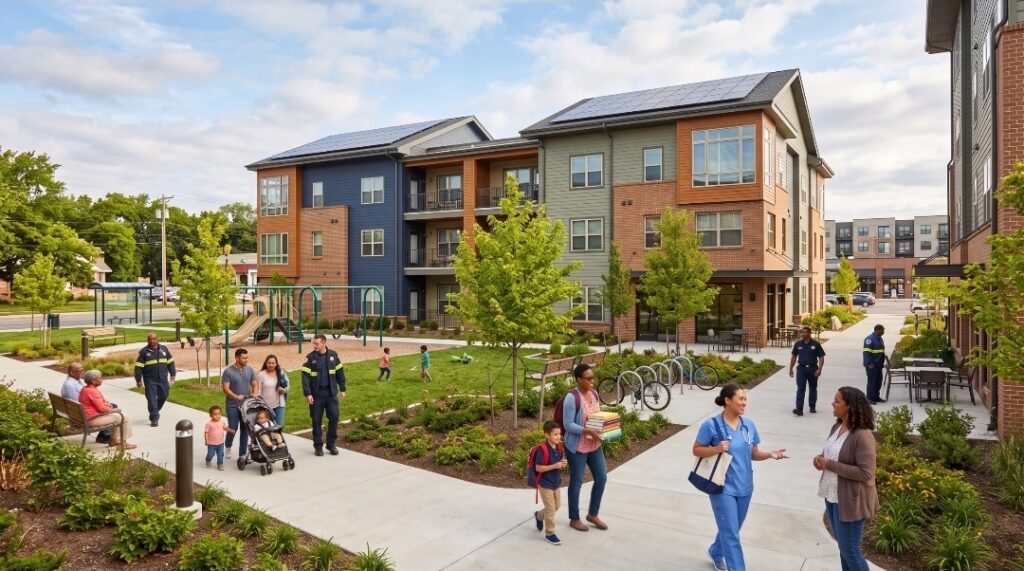
Workforce housing refers to housing options that are affordable to middle-income workers—specifically those who earn too much to qualify for traditional government-subsidized housing, but still struggle to afford market-rate housing in the communities where they work.
Key Characteristics
- Target Demographics: Essential middle-income workers, often called “key workers,” such as teachers, nurses, police officers, firefighters, retail workers, and municipal employees.
- Income Level: Generally serves households earning between 60% and 120% of the Area Median Income (AMI), though some regional programs extend this range to 80%–120% or up to 140% in high-cost metro areas.
- Affordability Target: Designed so that housing costs (rent or mortgage plus utilities) consume no more than 30% of a household’s gross income.
Workforce Housing vs. Affordable Housing
| Characteristic | Low-Income / Subsidized Affordable Housing | Workforce Housing |
|---|---|---|
| Income Target | Below 50%–60% Area Median Income (AMI) | 60%–120% Area Median Income (AMI) |
| Primary Funding | Federal subsidies, tax credits (e.g., LIHTC), public housing vouchers | Public-private partnerships, density bonuses, local tax incentives, private development |
| Target Audience | Low-income individuals, seniors, unemployed, disabled | Gainfully employed middle-income professionals |
Primary Objectives
- Reduce Commute Times: Helps essential employees live closer to their jobs, reducing traffic congestion and transportation costs.
- Economic Stability: Ensures local businesses, schools, and healthcare facilities can recruit and retain staff in high-cost real estate markets.
- Community Integration: Prevents economic displacement, keeping service workers embedded in the communities they support.